A Case Study on the Power of Clean Air at Home

Ben* is a 12-year old boy, who has had a diagnosis of asthma since early years. His asthma is exacerbated seasonally. He has lived with his family in a stone-built house for the last five years which has 3 bedrooms and 7 other living spaces in the building.
Background
Ben* is a 12-year-old boy who has had a diagnosis of asthma since early childhood. His asthma is seasonally exacerbated. He lives with his family in a 1900s stone-built, 10-room home (144m²), surrounded by fields and trees and located within 2 miles of a large city centre.
Ben's asthma symptoms significantly impacted his quality of life, particularly during the night and early mornings.
Challenges Before Intervention
Prior to June 2025, Ben's asthma symptoms were severe and persistent:
- Night-time symptoms: Ben would typically be awake for up to 3 hours after going to bed, coughing and needing frequent drinks due to a sore throat.
- Medication dependency: He relied heavily on a combination of a reliever inhaler, a preventer inhaler (used multiple times daily), and daily oral steroids.
- Fatigue and social impact: Poor sleep quality meant mornings were a struggle, and Ben was often too tired to engage in after-school activities or spend time with friends.
- Academic and emotional toll: His concentration at school was affected, and his confidence was low due to limited physical ability and reliance on medication.
Ben experienced symptom-free days only 1–2 times per month. Any exertion, such as walking up and down stairs or playing sports, caused chest tightness and other symptoms.
His condition disrupted his sleep and caused significant anxiety for both Ben and his family. Managing symptoms made school difficult, as much of his time was spent regulating his breathing rather than concentrating.
Ben was on substantial medication and under annual GP review, with 2–3 additional GP visits during winter months. He felt his medication offered limited benefit and felt embarrassed taking it in public.
Rationale for Intervention
Published research has demonstrated the benefits of appropriate ventilation, filtration and purification in indoor environments for symptomatic relief in respiratory conditions, including asthma and COPD.
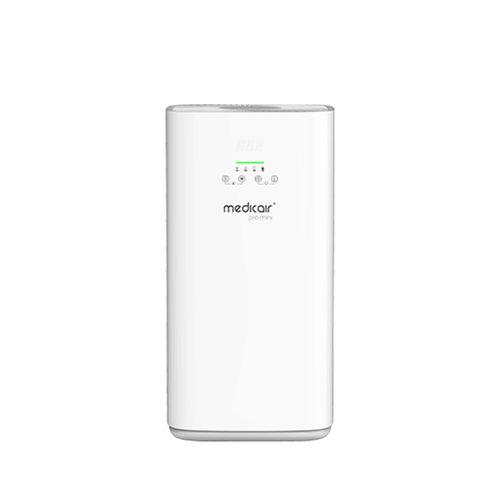
To explore whether improved indoor air quality could help Ben, a MedicAir Pro Mini portable air purifier was provided to his family.
Intervention Details
- Installed centrally within the home
- Powered on 24/7
- Set to Level 2 (Clean Air Delivery Rate of 270 m³/hr)
- Windows kept closed where possible to limit pollutant ingress
Outcomes After Installation
Within days of installation, Ben experienced a dramatic improvement:
- Symptom relief: Night-time coughing ceased and no reliever inhaler or drinks were required during the night.
- Improved sleep and energy: Ben began waking more easily with increased energy.
- Reduced medication use: Oral steroids were discontinued within three months (as advised by his GP), and the reliever inhaler is no longer used.
- Physical health: Increased activity led to a 5-inch reduction in waistline and improved fitness.
- Mental and emotional wellbeing: Increased confidence and enthusiasm for physical and social activities.
- Academic progress: Improved concentration and movement up a set at school.
Clinical Assessment
Medical Review
At Ben's annual asthma review, his GP was astonished by the physical and mental transformation. A follow-up review is scheduled in six months, with the possibility of discontinuing preventative medication if progress continues.
Impact on the Family and Indoor Environment
- Cleaner-feeling air throughout the home
- Easier breathing
- Reduced dust accumulation
- Reduced lingering food smells
Formal Assessment of Quality of Life
Two internationally recognised tools were used to assess disease-specific and general quality of life:
- St George's Respiratory Questionnaire (SGRQ) – lower scores indicate better health
- European Quality of Life 5-Dimensions (EQ-5D-3L) – higher scores indicate better health
Results showed a 50-point improvement in SGRQ scores and a 38% improvement in EQ-5D-3L Time Trade-Off scores over three months.
Medication Review
Before Intervention
- Symbicort Turbohaler – 200 mg, 4 times daily
- Terbutaline (Bricanyl Turbohaler) – 0.5 mg, 5–8 times daily
- Prednisolone – 40 mg once daily during exacerbations
- Paediatric Montelukast – 5 mg once daily
Three Months Post Intervention
- Inhaled steroid reduced to 100 mg, twice daily
- Terbutaline used once during a chest infection
- Cessation of oral steroids and Montelukast
Economic Benefits
- Reduced medication and pharmacy costs
- Avoided GP, A&E and hospital admission costs
- Reduced parental time off work
- Lower long-term risk of chronic respiratory disease
Conclusions
The MedicAir air purification unit had a rapid and sustained impact on Ben's asthma symptoms, quality of life and overall wellbeing. These improvements were validated using internationally recognised assessment tools and supported by clinical review.
"It has made a significant difference to my son, with his asthma and sleep routine. He has more energy during the day and gets up easier in the morning. He can now go out with his friends for longer periods of time, and he even walked to the top of Pen y Fan six weeks after we had the unit."
This case study highlights the potential health and quality-of-life benefits of indoor air quality interventions such as mobile ventilation and filtration units.
*The name has been changed to protect the individual's identity.
Explore Our Products
Our units are custom-engineered for a multi-stage air purification process that
offers medical-grade protection